

Hammock Camping Is Having a Moment: What's Trending in the Outdoor World This Spring
Hammock Camping Is Having a Moment: What's Trending in the Outdoor World This Spring
Something is shifting in the outdoors. Head to any trailhead this spring and you'll notice it: more hammocks strung between trees, fewer tents claiming flat ground. Chat with campers at a popular backcountry site and you'll find a surprising number of them have ditched their sleeping pads entirely. Scroll through #hammockcamping on any platform and the numbers are staggering—the community isn't just growing, it's exploding.
We track the hammock world closely here at Mr. Mocks, and the news coming out of spring 2026 is legitimately exciting. From major community gatherings making their way to the West Coast for the first time, to sustainability research validating what hangers have known for years, to gear innovation pushing what's possible in the backcountry—here's what's happening right now, and what it means for anyone who loves sleeping above the ground.
HangCon Goes West: The Hammock Community's Biggest Event Hits California
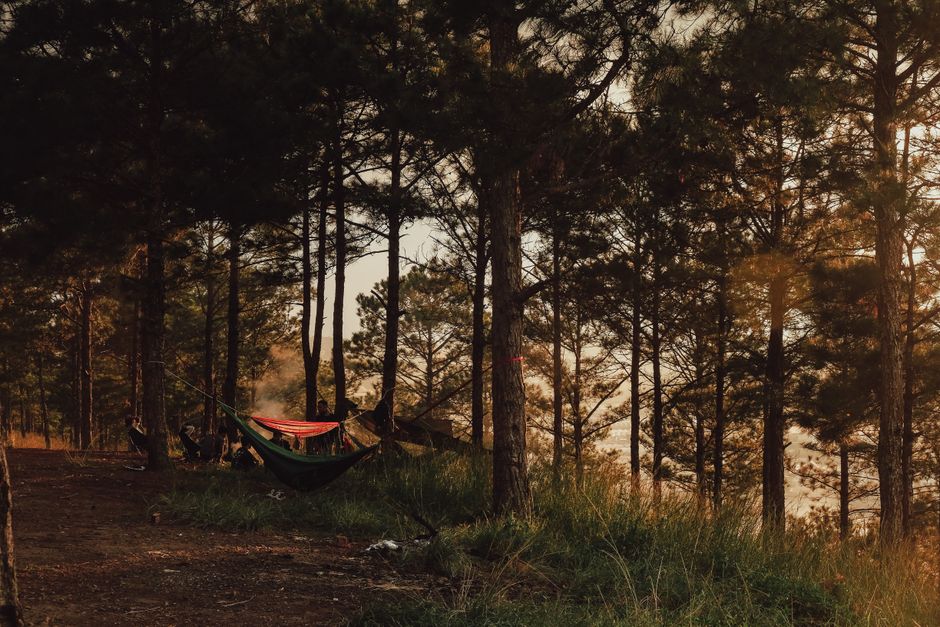
If you haven't heard of HangCon, it's exactly what it sounds like: the world's largest gathering of hammock enthusiasts. Think of it as Coachella, but instead of stages, there are trees, and instead of VIP sections, there are prime hang spots with good views.
This year, something big is happening: HangCon California 2026 is scheduled for June 18–21 over Father's Day Weekend—and it's the first time the event has ever been held on the West Coast. The venue is the Lobo and Oso Group Campgrounds in Angelus Oaks, California, nestled inside San Bernardino National Forest. Tickets are limited due to parking restrictions at the site, which means this one could sell out fast.
HangCon events are organized by Paul "Skunkape" Collins and AJ "Phoenix" Glenn, and they've built something genuinely special: a welcoming community for both first-time hangers and seasoned thru-hikers, with workshops on suspension systems, gear showcases featuring the latest hardware, and the kind of campfire conversations that make you want to stay an extra night.
For context, HangCon Florida 2026 already happened in January—five days at a site in Brooksville—and by all accounts it was the biggest one yet. The California edition in June will be something to watch.
Why it matters: Events like HangCon signal that hammock camping isn't just a niche hobby anymore. It's a full-blown culture with its own gathering points, its own vocabulary, and a passionate community that's actively recruiting new members. If you've been on the fence about making the switch from tents, this is a good year to dive in.
The Sustainability Case for Hammock Camping Just Got Stronger
One of the most compelling narratives in outdoor recreation right now is sustainability—and hammock camping keeps coming out ahead.
New research and trail-management reports published this spring are reinforcing what Leave No Trace educators have argued for years: hammock camping, done correctly, is meaningfully lower impact than tent camping. Here's the breakdown:
- No soil compaction: Tents flatten and compact ground vegetation over time. Hammocks leave the forest floor entirely untouched beneath you.
- No site preparation required: Tent campers often clear debris, rake leaves, or flatten rocks. Hammock campers set up without touching the ground at all.
- Distributed footprint: Instead of concentrating foot traffic in one overused flat spot, hammock campers can spread out between trees across a wider area—reducing the "beaten path" effect around popular campsites.
- Smaller physical footprint: A hammock with straps takes up a fraction of the packed volume of a tent and sleeping pad, which encourages lighter packs and shorter trips with lower overall impact.
The Leave No Trace Center for Outdoor Ethics has highlighted hammock camping in its 2026 "Spotlight" community conservation initiative—specifically noting that proper technique (wide straps, appropriate trees, responsible placement) makes hammocks one of the lowest-impact overnight options available to backcountry visitors.
The key qualifier, of course, is "done correctly." Wide, tree-friendly straps—at least 1 inch, ideally 1.5 inches—are non-negotiable. Wrapping paracord around a tree does real damage. The Mr. Mocks Double Mock comes with proper straps included in the kit, which is one of the reasons we put together the complete package rather than selling the hammock body alone.

Gear Innovation: What's Changing in Hammock Design for 2026
The hammock gear market is moving faster than it ever has. Here's what's actually new and worth paying attention to:
Modular Systems Are Going Mainstream
The biggest shift in hammock design this year is the move toward modularity. Manufacturers are building hammocks and shelters as interoperable systems—a base hammock body that pairs with an integrated bugnet, which pairs with a compatible tarp or rainfly, all designed to work together without extra hardware. The appeal is obvious: you build the exact system you need for any trip, and you're not paying for features you don't need in conditions that don't require them.
This is actually the design philosophy behind the Mr. Mocks lineup. The Double Mock is a capable standalone for fair-weather camping, and it's designed to be paired with a proper shelter system as conditions require. The idea is a capable base that grows with your needs—not an all-in-one product that compromises every component to keep the price down.
Fabric Technology Is Leveling Up
The nylon hammock market has fragmented into distinct tiers based on fabric weight, weave density, and coating. The 70D (denier) range—which is what Mr. Mocks uses in the Para-Chill™ fabric—has emerged as the sweet spot for most campers: light enough for backpacking at around 400–500 grams for a double hammock, strong enough to handle 400–550 pounds without anxiety, and comfortable enough to actually sleep in rather than just sit in.
Heavier 210D hammocks are still out there—they're bomber durable—but the weight penalty is increasingly hard to justify when 70D handles everything most campers will throw at it. Ultralight options (30D and below) exist for gram-counters, but they sacrifice the comfort and durability that make hammock camping appealing in the first place.
The Para-Chill™ fabric in the Mr. Mocks Double Mock sits at 70D because that's where the data points: it handles 550 lbs, it packs small, and it sleeps well.
Suspension Systems: The Detail That Actually Matters
If you've been around the hammock community for a while, you know that the hammock body itself is almost secondary to the suspension system. A great hammock hung wrong is uncomfortable and potentially unsafe. A solid suspension setup transforms even a basic hammock into a legitimately good night's sleep.
The industry trend this year is toward suspension systems that are simultaneously more adjustable and more foolproof. The goal: hang correctly on the first try, at the right angle (approximately 30 degrees below horizontal), without needing to re-rig everything from scratch when you find that the trees are 2 feet farther apart than ideal.
The Mr. Mocks kit includes a patent-pending angle indicator on the straps—a simple but genuinely useful feature that eliminates the guesswork on hang angle. It's the kind of detail that doesn't sound exciting until you've spent 20 minutes trying to get the sag right in the dark while your camping partners are already asleep.

The Wellness Angle: Why Sleep Researchers Are Paying Attention
Here's a trend that may surprise you: the health and wellness community has started taking hammock sleeping seriously.
Research published in recent years—and getting renewed attention this spring—suggests that the gentle rocking motion of a hammock can synchronize brain waves in ways that promote deeper, more restorative sleep. The effect is similar to what happens when adults are rocked—the vestibular input from the motion appears to help the brain transition into deeper sleep stages more reliably than lying completely still on a flat surface.
Beyond the rocking effect, hammocks distribute body weight across a much larger surface area than a sleeping pad or even most mattresses. The result is reduced pressure on joints, hips, and shoulders—which is particularly relevant for side sleepers, who often wake from tent camping with aches that didn't exist when they went to sleep.
This isn't fringe science anymore. Sleep researchers and wellness practitioners are actively collaborating with outdoor gear designers to understand and maximize these effects. The implication for the hammock camping world is straightforward: the thing that makes hammock camping appealing—sleeping above the ground, in a cocoon of fabric, gently swaying—is also, apparently, genuinely good for you.
Spring 2026 Camping Outlook: What to Expect on Trail
Beyond hammock-specific news, the broader camping landscape this spring reflects a few trends worth knowing about:
More people are camping more often. Post-pandemic outdoor recreation numbers have remained elevated, and spring 2026 is shaping up to be another strong season. Popular sites are booking out faster than in previous years, which means planning ahead—and having gear that sets up quickly—matters more than ever.
Sustainability expectations are rising. Campsite etiquette expectations have evolved significantly. Tree-friendly straps are no longer optional at many sites; some land managers are beginning to formally require straps of specified minimum widths. The days of slinging paracord around trees are genuinely over, and the community polices this actively.
"Rugged luxury" is a real trend. Glamping and comfort-focused camping are mainstream now, and that's actually good news for hammock campers: as the average camper expects a better night's sleep, hammocks—which can genuinely deliver one—become easier to justify over a ground setup.
Digital detox camping is surging. One of the fastest-growing camping motivations in 2026 is intentional disconnection: leaving the phone in the car and actually being in the woods. Hammock camping, with its inherent slowness and sensory engagement, is a natural fit for this approach. You can't really stare at a screen when you're gently swaying between trees in a forest.
What This Means If You're Getting Started This Season
If spring 2026 is the year you finally make the switch from tent to hammock—or if you're planning your first camping trip ever and considering skipping tents entirely—a few practical notes:
Start with a complete kit. The single most common beginner mistake is buying a hammock body without proper straps and carabiners, then improvising a suspension system that either damages trees or fails at the worst possible moment. The Mr. Mocks Double Mock comes as a complete kit: 10-foot × 6.5-foot hammock body, wide tree-friendly straps with the angle indicator, and 12kN carabiners rated for climbing. Everything you need, nothing you don't.
Learn the hang angle. 30 degrees below horizontal is the target. Shallower than that and you'll feel like you're rolling to the center all night; steeper and you're just in a bag. The angle indicator on the Mr. Mocks straps makes this easy to dial in.
Plan for insulation below you. The biggest comfort surprise for new hammock campers is that cold comes from below, not above. In temperatures below 60°F, you'll want an underquilt or a foam pad beneath you in the hammock. Above 60°F, you'll be fine with just the hammock and a top quilt or sleeping bag.
Show up to the community. The hammock camping community—exemplified by events like HangCon—is genuinely welcoming to newcomers. If you have questions about gear, technique, or finding good hang spots, there are forums, subreddits, and now in-person events that will answer them.
The hammock market is moving. The community is growing. And this spring is shaping up to be a genuinely good time to be a hanger.
The Mr. Mocks Double Mock is $49.95 and ships as a complete kit—hammock, straps, carabiners, and storage bag. If you've been waiting for the right moment to make the switch, spring 2026 is it.
Follow us at mrmocks.com for more camping guides, gear tips, and updates from the Mr. Mocks lineup.